Beyond Day SixMy sometimes-daily blog of a photograph or two with a few words, celebrating all the days of life that flow through creation into perspiration, inspiration, reflection, sabbath, and resurrection. Color EverywhereThis is "Freeda James", blooming in our garden on October 3. There are still a number of buds remaining that may bloom, if it doesn't frost first. We purchased several daylilies late in the summer with the intention of having a longer season. Although this flower is blooming in October, it may not bloom so late next year. But if it does, we will have daylilies blooming from late May into October. This is not the only one as "Autumn Minaret" still has blooms as well. And our maple trees are showing red and yellow leaves. Color everywhere.
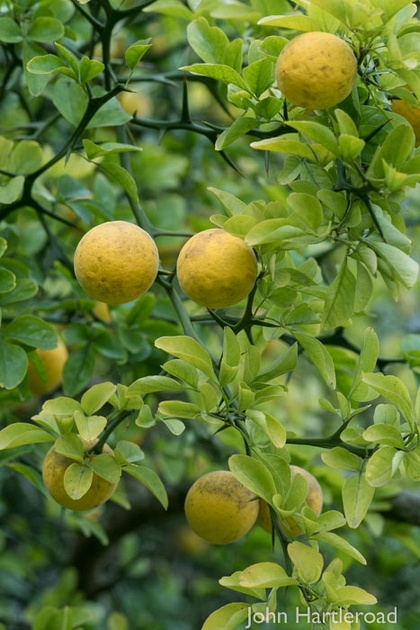
Mystery Number Three for this weekAnother puzzle from our trip along the Hiwassee River... Tall bush, probably over ten feet in height, with yellow fruit and sharp thorns. What is it?
After an internet search, it appears to be Kei-apple plant. Apparently tastes similar to apricots. But it's home is southern Africa. In the late 1940's some kei apple plants were grown in California and Florida, but the fruit was difficult to pick with the large thorns and challenging to process. Some places have used it for a tall, uninviting, but fragrant hedge. So after we discovered what we think it must be, a new mystery emerges---what is it doing in southeast Tennessee? It was thriving along the river, planted behind an old church near Reliance, Tennessee. It makes me wonder who planted it there and how they came across the plants. Life is full of mysteries! Mystery Number TwoThis is the second of three mysteries I encountered this past week. We saw this in two different locations: along the banks of the Hiwassee River and on the middle fork of The Little River in Great Smoky Mountains National Park. I posted this picture in the Tennessee Outdoor Photographers' group on Facebook and got an identification in less than three minutes. Isn't the internet great?
Mystery Number OneSaturday, we drove to Murphy, North Carolina. We stopped on the way to explore the route of our railroad trip along the banks of the Hiwassee River in southeastern Tennessee. We stopped at one of the parks and walked down to the river bed and found thousands of exposed rocks. At first they just looked dark, but on inspection they had streaks of green as if some meticulous painter had been very busy. I wondered if they weren't some oxidized copper residue, as they were copper mines in the past in the area. Judy thought they were some plant material as it scraped off fairly easily. It's still a mystery to us, but I found that the autumn leaves that had fallen onto the rocks created a picturesque landscape. I seem to find a picture everywhere.
Backward FenceThis is the reverse of the view from yesterday. Photographers are often encouraged to turn around and see if there's anything interesting behind you. I enjoy this photo as well. Exposure: f/4.5, 1/200 sec., iso 200.
Breaking the RulesI know the rules of composition. I try to be attentive to the placement of objects and the rule of thirds and noting where the scene is bright or dark. This photo from Bishop Hill, Illinois, breaks most of the rules. But it appeals to me. One thing I notice is how the fence draws your eye into the frame. Then your eye follows the windows in a counter-clockwise pattern to the leaves above and back to the left again where they obscure the columns. And the vertical columns direct your eye back to the fence. And then there's that tree, smack dab in the center of the frame. I suppose one could crop the two windows on the right, but then you omit the interesting wall detail. And how do you split the barrel of flowers that sits on the ground between the windows? I like it.
Bishop Hill was the site of a religious, utopian community founded in 1846 by Eric Janson. While it did not last long, some consider this town the beginning of Swedish America. At it's peak, more than 1000 lived here, but now the population is barely more than 100. Several buildings still stand and are part of historic preservation efforts. Better Late Than NeverAnother parable from Matthew's Gospel has Jesus telling about two sons, each receiving a request from their father to do a task. (21:23-32) One says he will do it but does not do it, and the other refuses initially but later complies by doing what was requested. Jesus asks which son was obedient. While the obvious answer for me is the one that did the task finally, there are cultures that respond that the second son insulted the father by saying no. So there is some ambiguity here, just as in the follow-up where Jesus says the tax collectors and the prostitutes will enter heaven first before those who claim to be religious (without showing it). There is a difference between words and actions. And God's realm includes those we think are too far gone on the moral level. I also hear something about nudges. I have a feeling I ought to do this thing or that or call this person. I'm surprised when I do how the timing was just right. I also regret ignoring so many nudges. Better late than never.
Pretty Day for a WalkThe days are getting shorter. The length of daylight is quite noticeable here as dawn arrives later and sunset is just after supper. But the weather has been glorious. I've resumed walking. It's not nearly as hot and I'm not swimming outside anymore. This shot is from last October when we went to Wisconsin for several days. I enjoy getting outside smelling and listening and seeing. It does me a world of good.
HibiscusLast year we had red hibiscus flowers in the three large planters, but this spring Judy bought yellow ones. The open bloom is quite nice but I thought this flower was striking with water droplets on it. I had fun with my new camera and macro lens. I use a tripod most of the time to be certain that the focus is sharp. No tripod this time. f/13 at 1/320 sec. with iso at 400. Camera is incredibly fast at focusing.
Efficient for More than a Hundred YearsLast year, about this same time, my photo group wet to southern Tennessee to photograph Falls Mill near Belvidere. Built in 1873, it still operates five days per week, year-round, grinding corn and wheat. Originally it was built as a cotton factory, and was used over the years as a cotton gin, and wood-working facility. The water wheel is 108 years old and is the sole power of the grinding wheel. So the massive wheel is turned by the force of water falling. And inside the noise is nearly deafening as gears and belts and wheels turn. No fossil fuels, no nuclear energy, no natural gas, no electricity; just water flowing downstream. Simple. Effective.
|